
Winter gravel and your windshield: how to avoid rock chips this season
Once the sand and gravel trucks start running, windshields take a beating on Deerfoot, Stoney Trail and Highway 2. What causes winter chips, how to keep a small one from spreading, and where windshield film fits.
Published November 16, 2026 by Xpress Auto & RV Detailing
Why chips pile up in a Calgary winter
Mid-November is when road crews across Calgary and the surrounding towns start putting gravel and sand down for traction. It helps tires grip, but it also means every truck and SUV ahead of you is flicking small stones back at your glass. Commutes on Deerfoot, Stoney Trail, Highway 2 to Airdrie and Okotoks, and Highway 1 out to Cochrane all see plenty of it.
Cold makes things worse. A chip that might have stayed small in July can run into a crack when a frozen windshield meets a blasting defroster, or when the temperature swings during a chinook. That is why a lot of drivers notice new damage in winter and early spring.
Simple habits that cut down on hits
Following distance does more than anything else. Gravel thrown by tires tends to come up at a low angle and fall off within a short distance, so backing off from the vehicle ahead, especially loaded pickups and highway trucks, keeps most of it off your glass.
Watch for freshly gravelled stretches after a storm and ease off the speed there. If someone passes you on a sanded road, give them a bit of room to pull away instead of tucking in right behind them.
Defrost and scrape without making it worse
Start the defroster on a low setting and let the glass warm gradually instead of going straight to full heat. Pouring hot water on a frozen windshield is a common way to turn a chip into a crack, so skip it.
Use a plastic scraper and let the defroster loosen the ice first. Keep your wiper blades in good shape too, since worn or torn blades drag grit across the glass and do not clear slush well. If you already have a chip, get it repaired early. Small chips are easier to fix before winter temperature swings stretch them out.
Where windshield protection film fits
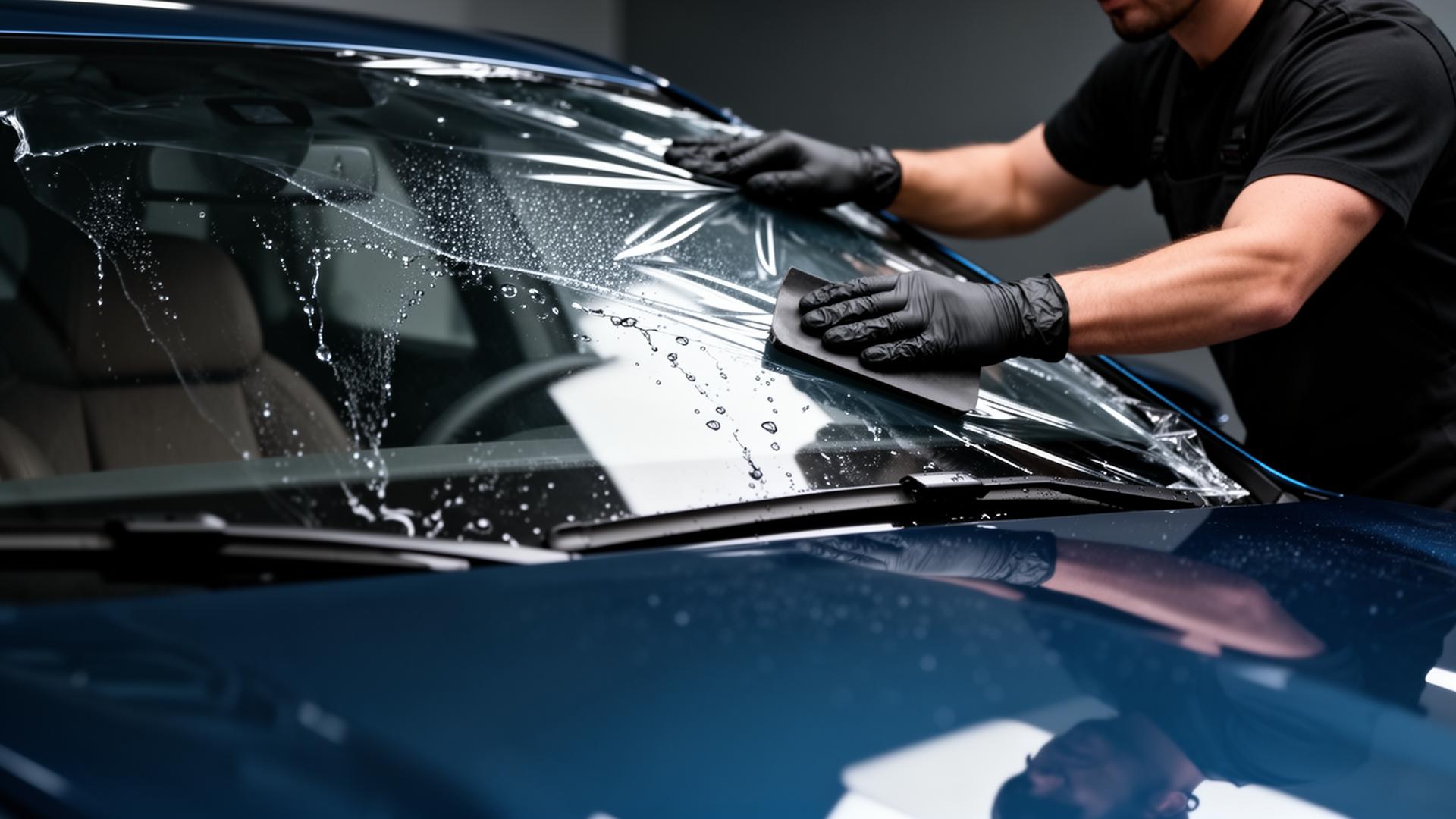
Windshield protection film is a clear film, cut to your year, make and model, that takes most of the hits that would chip bare glass. It is not unbreakable, and a large or sharp impact can still get through, but it gives the glass a layer that absorbs the steady stream of small stones a Calgary winter throws at it.
It also matters more on newer vehicles. Lane-keeping and emergency-braking cameras sit behind the windshield, so a replacement can mean recalibrating them as well. Keeping the factory glass avoids that, and the film is made so it does not block sensors, cameras or head-up displays.
We install it at your home or workplace in Calgary, Airdrie, Chestermere, Cochrane, Okotoks and Rocky View County. We're a certified ExoShield installer, and the film carries ExoShield's 3-year limited warranty, which we register for you. Sizes and pricing for sedans, SUVs, trucks, vans and RVs are on the windshield film page.
Protecting the paint up front, too
The same gravel that hits your windshield lands on the hood, bumper and mirrors. If you are already looking at film for the glass, it is worth looking at paint protection film for the front of the vehicle as well. Our PPF coverage options run from a partial front to the full front and full vehicle, and the PPF page explains which one suits city driving versus highway and gravel road trips.
Common questions
Can film go on a windshield that already has a chip?
Get the chip repaired first. The film does not fix existing damage, and it would seal the chip in underneath.
Can I still use my wipers and an ice scraper?
Yes. Keep the wiper blades in good condition, run the defroster first and use a plastic scraper gently, never a metal one. Avoid glass cleaners with ammonia or alcohol.
Does it work on trucks, vans and RVs?
Yes. Windshield film is offered for compact cars and sedans, midsize and full-size SUVs and trucks, and heavy-duty trucks, vans and motorhomes.